Lesson 6, 3rd Quarter, August 1-7, 2026
Spiritual Gifts
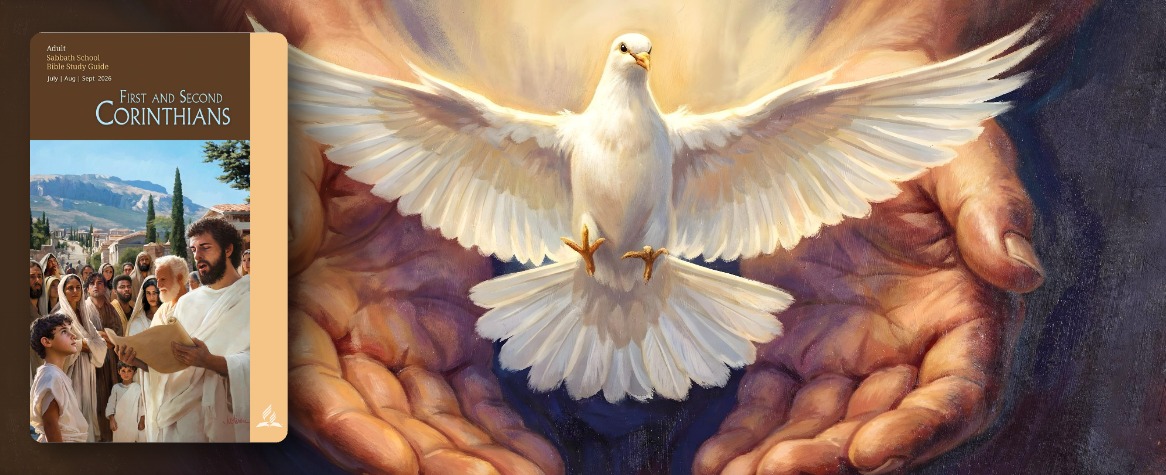
Sabbath Afternoon, August 1
Memory Text
“Follow after charity, and desire spiritual gifts, but rather that ye may prophesy.” KJV — 1Corinthians 14:1
“The beginning of the Christian era was marked by the outpouring of the Holy Spirit and the manifestation of various spiritual gifts. Among these was the gift of prophecy. In the book of Acts we read of the inspired utterances of Peter, of Stephen, and of others connected with the early Christian church; also of the four daughters of Philip, “virgins, which did prophesy;” and of a prophet named Agabus. Acts 21:9, 10. CET 240.1
“The apostle Paul had visions of the glory of heaven. See 2 Corinthians 12:1-7. He wrote at length in the twelfth chapter of first Corinthians concerning the gifts of the spirit that were given, not for one age alone, but “till we all come in the unity of the faith, and of the knowledge of the Son of God, unto a perfect man, unto the measure of the stature of the fullness of Christ.” Ephesians 4:13. “God hath set some in the church, first apostles, secondarily prophets, thirdly teachers, after that miracles, then gifts of healings, helps, governments, diversities of tongues.” 1 Corinthians 12:28. CET 240.2
“John, the last survivor of the twelve apostles of Jesus, was a prophet. In the closing book of the Bible, he tells of the visions that were given him while he was in banishment on the isle of Patmos. In recording these visions he declares them to be “the revelation of Jesus Christ, which God gave unto him, to show unto his servants things which must shortly come to pass;” and he says that Christ “Sent and signified it by his angel unto his servant John: who bare record of the word of God, and of the testimony of Jesus Christ, and of all things that he saw.” Revelation 1:1, 2.” CET 240.3
Sunday, August 2
Varieties of Gifts
Read 1 Corinthians 12:1–6. What is the emphasis of this passage?
“The organization of the church at Jerusalem was to serve as a model for the organization of churches in every other place where messengers of truth should win converts to the gospel. Those to whom was given the responsibility of the general oversight of the church were not to lord it over God's heritage, but, as wise shepherds, were to “feed the flock of God, ... being ensamples to the flock” (1 Peter 5:2, 3); and the deacons were to be “men of honest report, full of the Holy Ghost and wisdom.” These men were to take their position unitedly on the side of right and to maintain it with firmness and decision. Thus they would have a uniting influence upon the entire flock. AA 91.1
“Later in the history of the early church, when in various parts of the world many groups of believers had been formed into churches, the organization of the church was further perfected, so that order and harmonious action might be maintained. Every member was exhorted to act well his part. Each was to make a wise use of the talents entrusted to him. Some were endowed by the Holy Spirit with special gifts—“first apostles, secondarily prophets, thirdly teachers, after that miracles, then gifts of healings, helps, governments, diversities of tongues.” 1 Corinthians 12:28. But all these classes of workers were to labor in harmony. AA 91.2
“‘There are diversities of gifts, but the same Spirit. And there are differences of administrations, but the same Lord. And there are diversities of operations, but it is the same God which worketh all in all. But the manifestation of the Spirit is given to every man to profit withal. For to one is given by the Spirit the word of wisdom; to another the word of knowledge by the same Spirit; to another faith by the same Spirit; to another the gifts of healing by the same Spirit; to another the working of miracles; to another prophecy; to another discerning of spirits; to another divers kinds of tongues; to another the interpretation of tongues: but all these worketh that one and the selfsame Spirit, dividing to every man severally as He will. For as the body is one, and hath many members, and all the members of that one body, being many, are one body: so also is Christ.’ 1 Corinthians 12:4-12.” AA 92.1
Monday, August 3
Unity Through Diversity
Read 1 Corinthians 12:12–31. Why is the analogy of a body with its many parts appropriate to represent the church and its members?
“The twelfth chapter of First Corinthians contains instruction for all who minister before God. The apostle says, “There are diversities of gifts, but the same Spirit. And there are differences of administrations, but the same Lord. And there are diversities of operations, but it is the same God which worketh all in all.... For as the body is one, and hath many members, and all the members of that one body, being many, are one body: so also is Christ” (1 Corinthians 12:4-6, 12). 21MR 276.2
“The vine has many branches, but though all the branches are different, they do not quarrel. In diversity there is unity. All the branches obtain their nourishment from one source. This is an illustration of the unity that is to exist among Christ’s followers. In their different lines of work they all have but one Head. The same Spirit, in different ways, works through them. There is harmonious action, though the gifts differ. Study this chapter. You will see from it that the man who is truly united with Christ will never act as though he were a complete whole in himself. 21MR 276.3
“God will use you when you are willing to be used in His appointed way. Remember that the church of believers constitutes the body of Christ and “that there should be no schism in the body; but that the members should have the same care one for another” (verse 25). God calls upon you to unite with your brethren. He has assigned different gifts to the different members of His body. He has given them such talents and opportunities as will best promote His glory and the advancement of His kingdom. He is put to shame when the members of His body work contrary one to the other. 21MR 276.4
“A man does not gain perfection and influence by doing the work of another, but by faithfully discharging his own duties as a part of the great whole. All the members of Christ’s body are to be united by sympathy for one another and by fidelity to Christ. With humble faith they are to do their work, laboring in Christ’s lines. The man who walks and works away from Christ will finally reach the lowest place, whatever his position and influence may now be.” 21MR 276.5
Tuesday, August 4
“A More Excellent Way”
Read 1 Corinthians 13:1–7 and 1 Peter 4:8–11. What is the role of love as far as spiritual gifts are concerned?
“And then, in words which from that day to this have been to men and women a source of inspiration and encouragement, Paul set forth the importance of that love which should be cherished by the followers of Christ: “Though I speak with the tongues of men and of angels, and have not charity, I am become as sounding brass, or a tinkling cymbal. And though I have the gift of prophecy, and understand all mysteries, and all knowledge; and though I have all faith, so that I could remove mountains, and have not charity, I am nothing. And though I bestow all my goods to feed the poor, and though I give my body to be burned, and have not charity, it profiteth me nothing.” AA 318.1
“No matter how high the profession, he whose heart is not filled with love for God and his fellow men is not a true disciple of Christ. Though he should possess great faith and have power even to work miracles, yet without love his faith would be worthless. He might display great liberality; but should he, from some other motive than genuine love, bestow all his goods to feed the poor, the act would not commend him to the favor of God. In his zeal he might even meet a martyr's death, yet if not actuated by love, he would be regarded by God as a deluded enthusiast or an ambitious hypocrite.” AA 318.2
“Love to God must be brought into our daily life. Then, and then only, can we show true love for our fellow-men. When this is done, when Christ is enthroned in our hearts, we manifest by our daily life, by our conversation, by our unselfish interest in one another, by our deep love for souls, that we are doers of the Word of God. The reality of our conversation is marked by a deep earnest piety, which purifies the soul, and works unceasingly for the good of others. ST March 11, 1897, par. 14
“‘Beloved, let us love one another; for love is of God.’ ‘Love worketh no ill to his neighbor; therefore love is the fulfilling of the law.’ ‘The end of all things is at hand; be ye therefore sober, and watch unto prayer. And above all things, have fervent charity among yourselves; for charity shall cover a multitude of sins.”’ST March 11, 1897, par. 15
Wednesday, August 5
The Gift of Tongues
Read 1 Corinthians 14:5, 13, 26, 27 and 1 Corinthians 12:10, 30. What particular instruction did Paul give concerning the gift of tongues?
“In all the Lord’s arrangements, there is nothing more beautiful than His plan of giving to men and women a diversity of gifts. The church is His garden, adorned with a variety of trees, plants, and flowers. He does not expect the hyssop to assume the proportions of the cedar, nor the olive to reach the height of the stately palm. Many have received but a limited religious and intellectual training, but God has a work for this class to do, if they will labor in humility, trusting in Him. ST March 15, 1910, par. 4
“God has different ways of working, and He has different workmen to whom He entrusts varied gifts. One worker may be a ready speaker; another a ready writer; another may have the gift of sincere, earnest, fervent prayer; another the gift of singing; another may have special skill in explaining the Word of God with clearness. And each gift is to become a power for good, because God works with the laborer. To one God gives the word of wisdom, to another knowledge; but all are to work under the same Head. The diversity of gifts leads to a diversity of operations; but “it is the same God which worketh all in all.” ST March 15, 1910, par. 5
“The principle presented by Paul concerning the gift of tongues is equally applicable to the use of the voice in prayer and social meeting. We would not have anyone who is defective in this respect cease from offering public prayer, or from bearing witness to the power and love of Christ. CT 245.1
I do not write these things to silence you, for there has already been too much silence in our meetings; but I write that you may consecrate your voice to Him who gave you this gift, and may realize the necessity of cultivating it so that you may edify the church by what you say. If you have acquired the habit of speaking in a low, indistinct way, you should regard it as a defect, and put forth earnest efforts to overcome, that you may honor God and edify His children. CT 245.2
In our devotional meetings, our voices should express by prayer and praise our adoration of the heavenly Father, that all may know that we worship God in simplicity and truth, and in the beauty of holiness. Precious indeed in this world of sin and ignorance is the gift of speech, the melody of the human voice, when devoted to the praise of Him who hath loved us and given Himself for us. CT 245.3
Thursday, August 6
The Gift of Prophecy
Read Ephesians 4:11–13 and 1 Corinthians 14:3, 4. What do these passages say about the purpose of spiritual gifts in general and the gift of prophecy in particular?
“It always has been a characteristic of false prophets that they see visions of peace; and they will be saying peace and safety when sudden destruction comes upon them. The true will boldly reprove sin and warn of coming wrath. 1SG 11.1
“Prophesyings which contradict the plain and positive declarations of the word are to be rejected. An example is given in the manner of Christ's second coming. When Jesus ascended to heaven in the sight of his disciples, it was declared most explicitly by the angels, that this same Jesus should so come in like manner as they had seen him go into heaven. Hence Jesus in predicting the false prophets of the last days, says, if they shall say unto you, behold, he is in the desert; go not forth: behold, he is in the secret chambers; believe it not. All true prophesying on that point must recognize his visible coming from heaven. Why did not Jesus say, reject all prophesying at that time, for there will be no true prophets then? 1SG 11.2
“Ephesians 4:11-13. “And He gave some, apostles; and some, prophets; and some, evangelists; and some, pastors and teachers; for the perfecting of the saints, for the work of the ministry, for the edifying of the body of Christ; till we all come in the unity of the faith, and of the knowledge of the son of God, unto a perfect man, unto the measure of the stature of the fullness of Christ.” 1SG 12.1
“We learn from a previous verse that when Christ ascended up on high, he gave gifts unto men. Of these gifts are enumerated apostles, prophets, evangelists, pastors and teachers. The object for which they were given was the perfecting of the saints in unity and knowledge. Some, who profess to be pastors and teachers, at the present day, hold that these gifts fully accomplished their object some eighteen hundred years ago, and consequently ceased. Why not then throw aside their titles of pastors and teachers? If the office of prophet is limited by this text to the primitive church, so is that of evangelist and all the rest; for there is no distinction made.” 1SG 12.2
Friday, August 7
Further Thought
“On the Day of Pentecost the disciples were thus endued with power from on high. But this promise of Christ's was not, any more than the prophecy of Joel, confined to that occasion. For He gave them the same promise in another form by assuring them that He would be with them always, even to the end of the world. Matthew 28:20. Mark tells us in what sense and what manner the Lord was to be with them. He says, “And they went forth, and preached everywhere, the Lord working with them, and confirming the word with signs following.” Mark 16:20. And Peter, on the Day of Pentecost, testified concerning the perpetuity of this operation of the Spirit which they had witnessed. When the convicted Jews said unto the apostles, “What shall we do?” Peter answered, “Repent, and be baptized every one of you in the name of Jesus Christ for the remission of sins, and ye shall receive the gift of the Holy Ghost. For the promise is unto you, and to your children, and to all that are afar off, even as many as the Lord our God shall call.” Acts 2:37-39. This certainly provides for the operation of the Holy Spirit in the church, even in its special manifestations, to all coming time, as long as mercy shall invite men to accept the pardoning love of Christ. PP 23.1
“Twenty-eight years later in his letter to the Corinthians, Paul set before that church a formal argument on the question. He says (1 Corinthians 12:1), “Now concerning spiritual gifts, brethren, I would not have you ignorant”—so important did he deem it that this subject should be understood in the Christian church. After stating that though the Spirit is one it has diversities of operation, and explaining what those diversities are, he introduces the figure of the human body, with its various members, to show how the church is constituted with its different offices and gifts. And as the body has its various members, each having its particular office to fill, and all working together in unity of purpose to constitute one harmonious whole, so the Spirit was to operate through various channels in the church to constitute a perfect religious body. Paul then continues in these words: “And God hath set some in the church, first apostles, secondarily prophets, thirdly teachers, after that miracles, then gifts of healing, helps, governments, diversities of tongues.” PP 23.2
“The declaration that God hath set some in the church, etc., implies something more than that the way was left open for the gifts to appear if circumstances should chance to favor. It rather signifies that they were to be permanent parts of the true spiritual constitution of the church, and that if these were not in active operation the church would be in the condition of a human body, some of whose members had, through accident or disease, become crippled and helpless. Having once been set in the church, there these gifts must remain until they are formally removed. But there is no record that they ever have been removed. PP 24.1
“Five years later the same apostle writes to the Ephesians relative to the same gifts, plainly stating their object, and thus showing indirectly that they must continue till that object is accomplished. He says (Ephesians 4:8, 11-13): “Wherefore He saith, when He ascended up on high, He led captivity captive, and gave gifts unto men.... And He gave some, apostles; and some, prophets; and some, evangelists; and some, pastors and teachers; for the perfecting of the saints, for the work of the ministry, for the edifying of the body of Christ: Till we all come in the unity of the faith, and of the knowledge of the Son of God, unto a perfect man, unto the measure of the stature of the fullness of Christ.” PP 24.2
“The church did not reach the state of unity here contemplated, in the apostolic age; and very soon after that age, the gloom of the great spiritual apostasy began to overshadow the church; and certainly during the state of declension, this fullness of Christ, and unity of faith, was not reached. Nor will it be reached till the last message of mercy shall have gathered out of every kindred and people, every class of society, and every organization of error, a people complete in all gospel reforms, waiting for the coming of the Son of man. And truly, if ever in her experience the church would need the benefit of every agency ordained for her comfort and guidance, encouragement and protection, it would be amid the perils of the last days, when the powers of evil, well-nigh perfected by experience and training for their nefarious work, would, by their masterpieces of imposture, deceive if it were possible even the elect. Very appropriately, therefore, come in the special prophecies of the outpouring of the Spirit for the benefit of the church in the last days.” PP 24.3